How Fast Should I Reply to a New Enquiry?
As soon as you can, without replying at all hours. The first good reply someone gets often decides who they hire.
 By Stephen OsmondWebsites and local marketing for small businesses in Belleville and the Quinte region
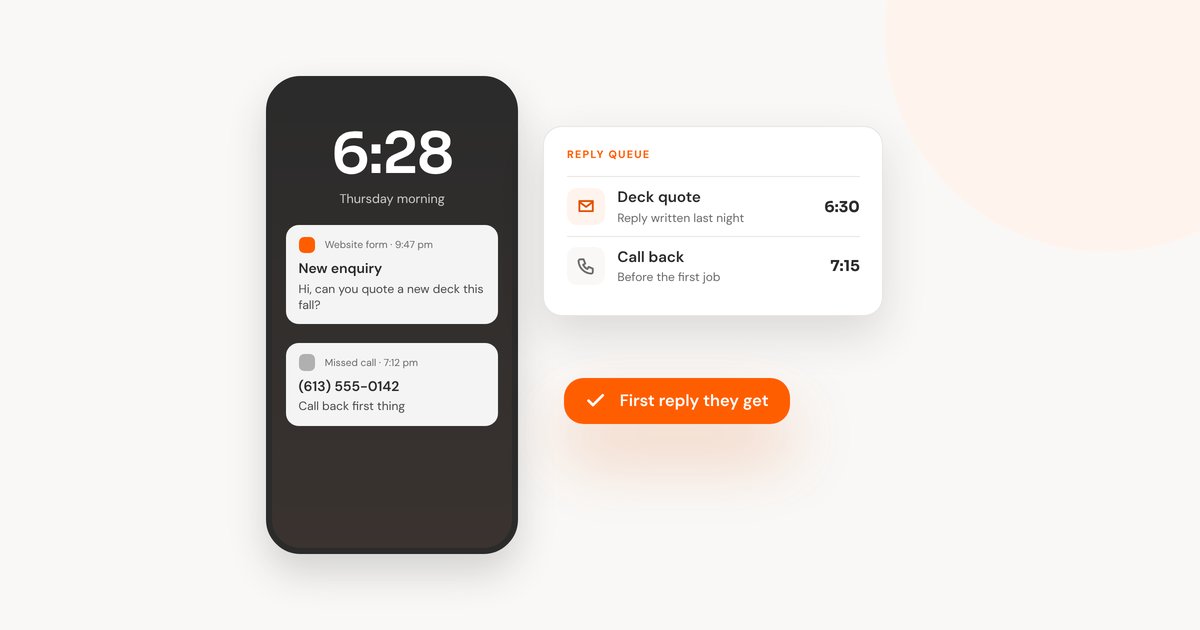
When a new lead comes in, my phone tells me. Calls, emails, texts and website enquiries all send me a notification, and I reply as soon as I can.
Not at any hour, though. If something lands late in the evening, I don't fire back a reply at bedtime. I get the response ready and send it at the crack of dawn, so it's waiting when they start their day.
I bother because it works. Many times I've been the first to respond, the person liked how the conversation went, and I got the job without them even asking anyone else for a quote.
Why the First Reply Carries So Much Weight
Someone looking for help often contacts two or three businesses at once. Whoever answers first gets the first real conversation. They get to ask about the job, explain how they'd handle it, and show that they're organised. If that goes well, the search often stops there.
Being first won't win the job on its own. The person still has to like you and trust you. But it's very hard to win a job when someone else has already had that conversation.
There's research behind this too, though it's older and American. In 2011, Harvard Business Review published an audit of 2,241 U.S. companies that tested how long each took to answer a web enquiry. Among the companies that replied within 30 days, the average wait was 42 hours, and 23% never replied at all. The same article reported that firms trying to reach a lead within an hour were nearly seven times as likely to have a meaningful conversation with the decision-maker as firms that waited even one hour longer.
What Fast Looks Like When You Run the Business Yourself
Fast doesn't mean answering in seconds, around the clock. It means being the first good reply they get.
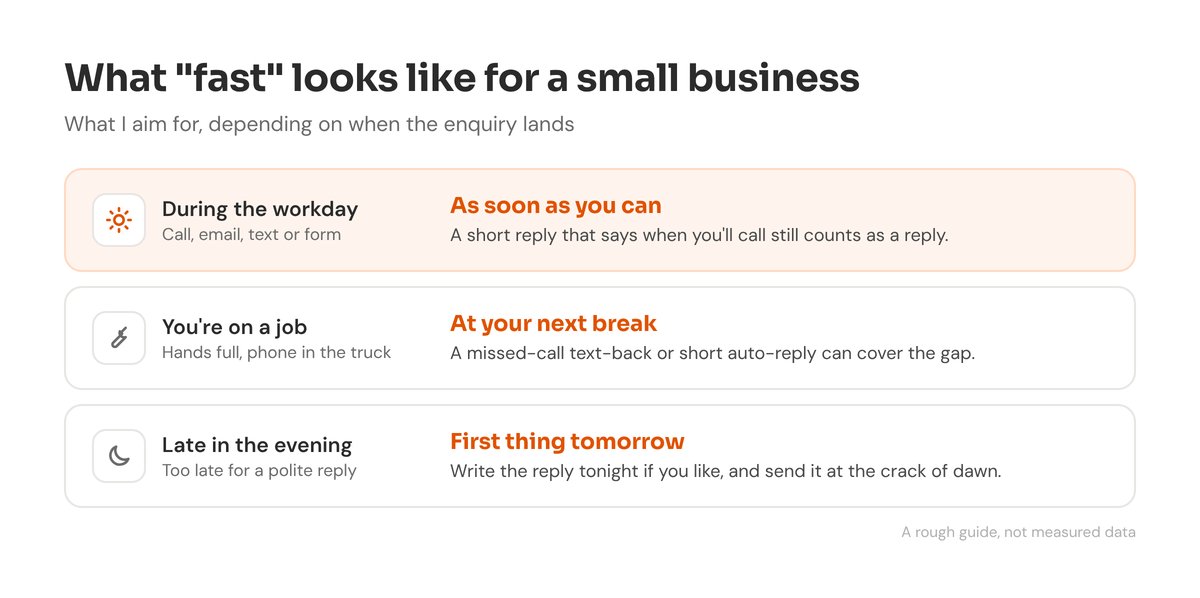
During the workday, reply as soon as you can, even if it's a short message saying when you'll call. If you're in the middle of a job, reply at your next break. And if it's late, write the reply in the evening if that helps you, then send it first thing the next morning. Early-morning replies tend to land well. They show you're on top of things without suggesting you never stop working.
Make Sure Every Enquiry Reaches You
Before you can reply quickly, you need to know the enquiry exists. Leads arrive in more places than most owners realise: phone calls, voicemail, email, your website form, texts and social media messages. Check that each one sends a notification to your phone, and test your website form now and then to make sure messages still arrive.
If enquiries are scattered across several inboxes, a simple CRM can collect them in one list and remind you who's still waiting for an answer.
Auto-Replies and Missed-Call Text-Backs
I don't use an auto-reply myself, but I'm not against them. For some businesses they make a lot of sense, especially when you know you can't answer for a few hours. A good one sounds like a person and says when you'll be in touch. It doesn't just say “we value your enquiry.”
An auto-reply that sounds like you
Thanks for getting in touch! I'm on a job right now, but I'll call you back by the end of the day. If it's urgent, text this number and I'll see it at my next break. – [Your name]
A missed-call text-back is the same idea for phone calls. If you can't pick up, the caller automatically gets a text saying you'll call back soon. It's great for busy people like trades, who can't answer from a roof or under a sink. The caller knows they reached a real business, and they're less likely to try the next name on the list while they wait.
Keep these messages about the enquiry itself. Under Canada's anti-spam law, an enquiry gives you implied consent to send messages for six months, but don't turn that first text into a sales pitch.
What Usually Gets in the Way
In my experience, two things slow most people down. The first is plain putting it off. The enquiry arrives, it isn't urgent right this minute, and it waits until later. Then tomorrow.
The second is a worry about looking desperate, as if a quick reply says you have nothing else on. I don't think customers see it that way. A prompt, friendly reply says you're organised and you care about their job. Desperate is chasing someone five times or offering a discount before they've asked for one.
A quick first reply
Hi [name], thanks for reaching out about [the job]. I'd be glad to help. Are you free for a quick call this afternoon or tomorrow morning? I'll ask a few questions and give you a sense of timing and cost.
Calls from your Google listing count too, so it's worth keeping the phone number and hours on your Google Business Profile right. And once the job is done, that same quick, friendly contact makes it much easier to ask for a review.
If you'd like to see how easy your business is to contact online, run the free checkup.
Want fewer enquiries slipping through?
I can make sure every call, email and form reaches you, and set up simple tools that reply for you when you're busy.